
Jamie McMartin leads one of Houston's most productive real estate teams. But despite having the resources to handle almost anything in-house, her marketing was fragmented, inconsistent, and failing to reflect the caliber of her business.
So she did something bold: she paused everything.
After a full rebuild centered on outsourcing, systems, and data-driven consistency, Jamie transformed her marketing tactics — and massively scaled her GCI.
Now she's sharing her entire strategy with you, completely free.
Jamie's Numbers
367
Transactions
$3,530,000
GCI
30
Days to implement the system
3
Hours a week saved
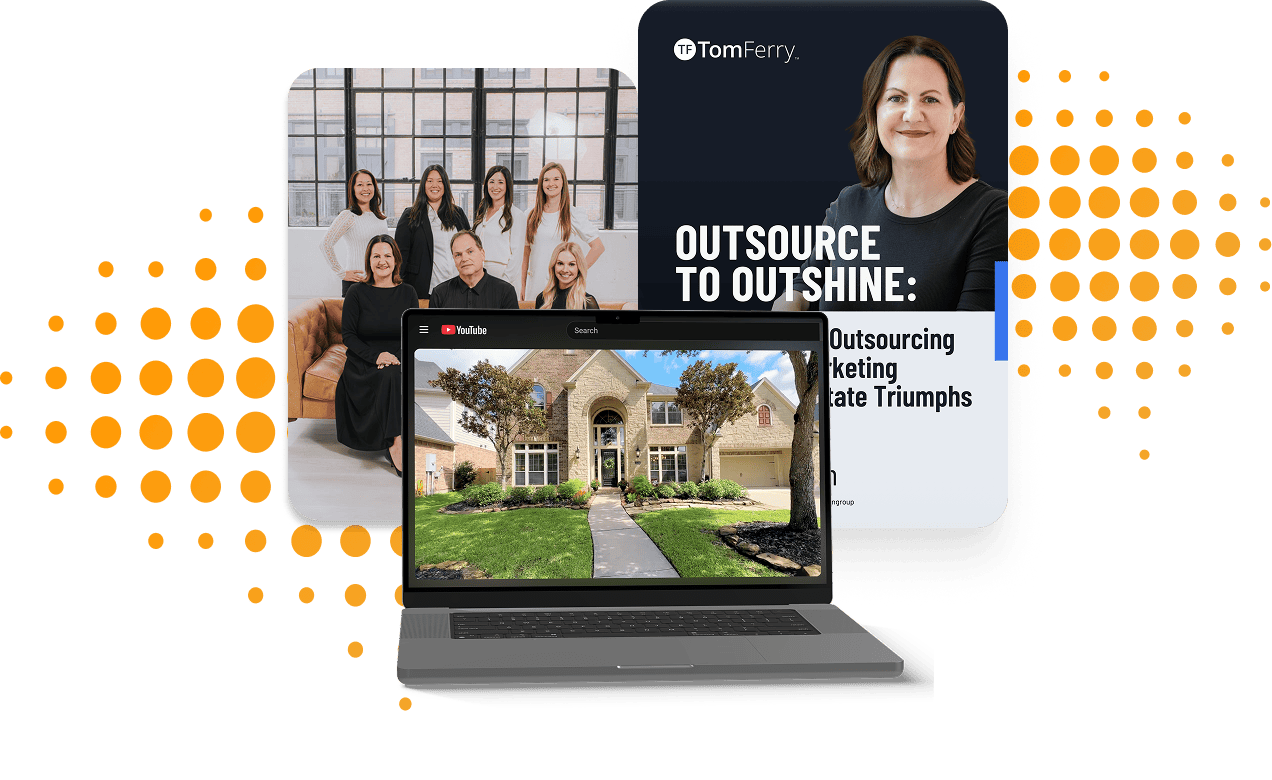
This playbook gives you Jamie’s…
- 5-step digital marketing framework
- Complete outsourcing playbook
- Her full content system: SOPs, content calendars, and design templates
- Self-evaluation worksheet to audit your own marketing gaps
- Real examples of social posts, Reels, and marketing plan
Jamie on Coaching
"Coaching has had a transformative impact on me and my business by providing a supportive environment where I can refine strategies and ideas. It offers a space for confidential conversations, allowing me to discuss challenges and opportunities with honest feedback and collaboration. The coaching relationship fosters accountability without ego, helping me stay focused on my goals while continuously improving my skills."
Download the Playbook

Frequently Asked Questions
What are marketing tactics?
Marketing tactics are the specific, actionable steps you take to execute a broader strategy — things like posting consistently on social media, sending a monthly email newsletter, running targeted ads, or hosting community events that keep your brand visible and top of mind.
For real estate agents, the right marketing tactics can mean the difference between a pipeline that runs on referrals and word of mouth versus one that stalls the moment you stop hustling. That's why Jamie McMartin built her entire system around a small set of high-leverage tactics that could be documented, delegated, and repeated without losing quality.
When you download the playbook, you'll find a curated set of marketing tactics tailored specifically to agents who want scalable results — not just busy work.
How do you market your business?
Marketing your business starts with clarity: know who you're trying to reach, what you want to say, and where your ideal clients are already spending their attention.
From there, it becomes a matter of creating a content strategy that consistently delivers value to your audience across the right channels. Jamie's approach was to create a brand identity that was unmistakably hers — consistent visuals, a clear voice, and a message that attracted her ideal client — and then build repeatable systems around it. If you want to improve marketing strategy results, start by auditing what's already working and ruthlessly cutting what isn't. Use data to guide decisions: look at your engagement rate across platforms, track which content types drive the most inquiries, and double down on the formats your audience responds to. Marketing your business isn't about doing everything — it's about doing the right things well, over and over again.
How do you do content marketing?
Content marketing is the practice of creating and sharing valuable, relevant content that builds trust with your audience and keeps you front of mind — long before someone is ready to make a move.
For real estate agents, creating a content strategy means deciding in advance what topics you'll cover, how often you'll post, and which platforms will get your focus. Jamie's playbook includes her exact content calendar and SOPs, making it simple to create a brand that feels professional and consistent without requiring you to reinvent the wheel every week. Strong content marketing also means understanding your numbers: your engagement rate on every piece of content tells you what resonates with your audience and what falls flat. As you gather that data, you can improve marketing strategy by leaning into the content that earns attention and phasing out what doesn't. Over time, creating a content strategy becomes one of the most powerful long-term investments in your business — compounding in visibility, trust, and inbound leads month after month.
How to measure social media engagement?
Social media engagement is measured by tracking interactions — likes, comments, shares, saves, and direct messages — relative to your total reach or follower count.
Your engagement rate is typically calculated by dividing total engagements by total reach (or followers) and multiplying by 100. A healthy engagement rate signals that your content is actually connecting with people, not just appearing in their feeds. Beyond the raw number, pay attention to which content types drive the strongest engagement rate — Reels versus static posts versus carousels often perform very differently for the same audience. This is a core part of how you improve marketing strategy over time: you test, measure, and adjust based on real data rather than gut feeling. Pair your social metrics with broader sales performance tracking to see whether social engagement is actually translating into conversations and closings — because vanity metrics alone won't grow your GCI.
How to improve sales performance?
Improving sales performance starts with knowing exactly where your pipeline breaks down — whether that's lead generation, follow-up, the listing presentation, or somewhere in the negotiation.
Sales performance tracking gives you the visibility to identify those gaps before they cost you deals. Without consistent sales performance tracking, most agents operate on instinct and hope, which makes it nearly impossible to improve marketing strategy, refine outreach, or know whether a new tactic is actually moving the needle. Jamie's playbook includes a self-evaluation worksheet designed to help you audit your own numbers and pinpoint the leverage points in your business. When you combine clear data from sales performance tracking with the right systems — a documented follow-up process, a compelling listing presentation, and a consistent content presence — you create the conditions for predictable, compounding growth. Create a brand and a process clients trust, and your sales performance will reflect it.